
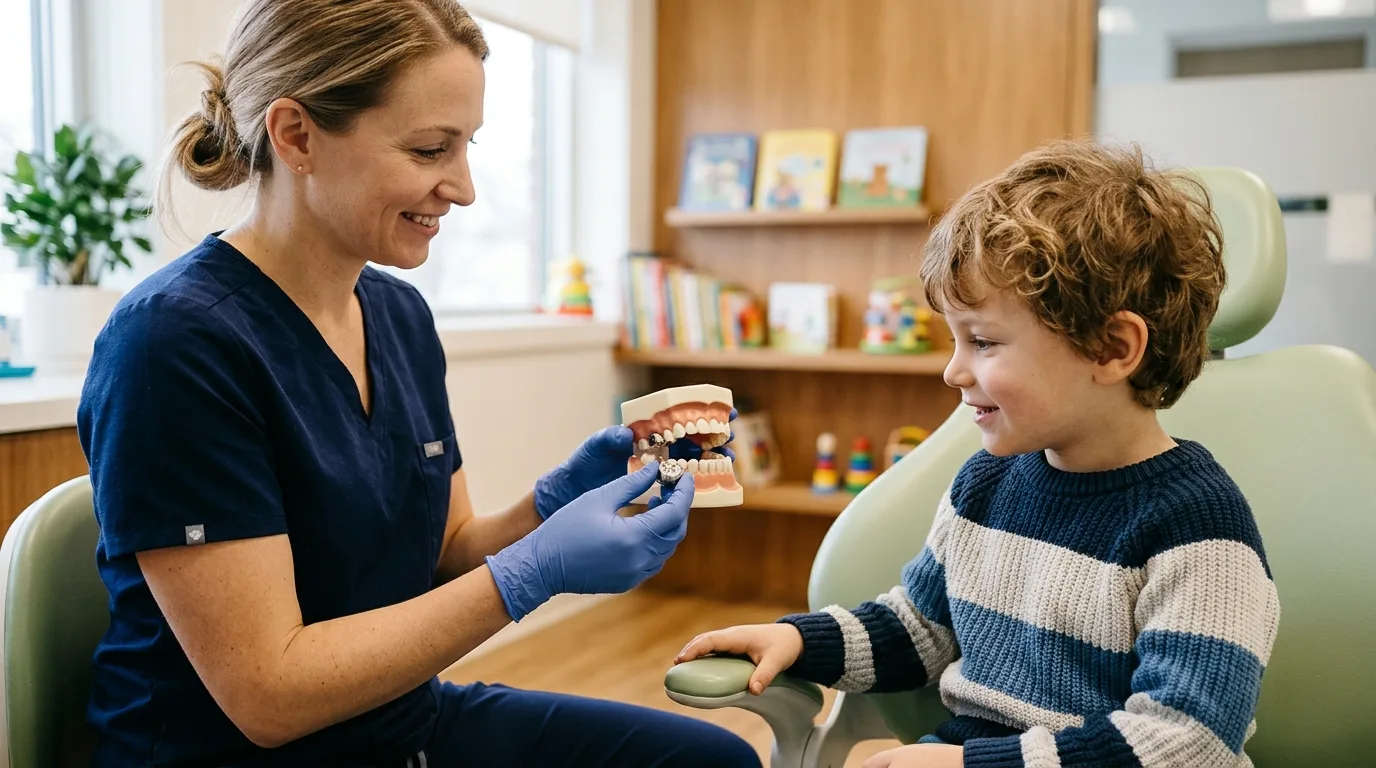
When a primary molar has a large cavity, many parents wonder if it's worth treating, since it's going to fall out anyway. The answer is almost always yes: baby teeth hold space for permanent teeth, help with proper chewing and speech, and an infection in them can be painful and affect the developing tooth underneath. That's where metal crowns come in.
A pediatric metal crown is a small, preformed cap, usually made of stainless steel, that completely covers the primary molar. It comes in various sizes, so the dentist selects the one that best fits your child's tooth and adapts it during the same appointment, without molds or waiting for a lab.
They are typically recommended when decay is so extensive that a standard filling wouldn't hold, when the tooth has been weakened following nerve treatment (pulpotomy), when enamel has formed with defects and breaks easily, or for children at high risk of tooth decay who benefit from long-lasting protection. In all cases, the goal is the same: to keep the tooth healthy and pain-free until it falls out naturally.
Their greatest advantage is durability. By covering the entire tooth, they protect it from new decay and fractures, and they usually last until the baby tooth is shed. This means fewer visits to replace fillings and fewer difficult moments in the dental chair for the child.
Placement is simple and fast. Local anesthesia is usually applied to keep your child comfortable, the decay is cleaned out, the tooth is shaped as needed, and the crown is cemented. In some cases, depending on the condition of the tooth, the dentist may consider techniques that require minimal tooth preparation. Afterward, the child might feel their bite is slightly different for a few days, which usually resolves on its own.
The question we hear most is about appearance. It is true that they look silver, but they are placed on the back molars and are hardly noticeable when talking or smiling. For front teeth, there are other, more aesthetic options, and the dentist will explain what is best in each case.
At home, care is standard: brushing twice a day with age-appropriate fluoride toothpaste, flossing if recommended, and limiting sugary sweets and drinks between meals. The crown protects the tooth, but the gums and neighboring teeth still need attention. Regular check-ups ensure everything stays on track.
When the time comes, the primary molar falls out along with its crown, just like any other baby tooth, making way for the permanent one. There is no need to remove it beforehand or do anything special.
Every child is different, and only a professional evaluation can determine if a metal crown is the best option for their tooth or if a simpler treatment will suffice. At Biodent, in Torrevieja and Ciudad Quesada, we treat little ones with patience and explain every step so they feel at ease. If you have questions about your child's teeth, book an appointment and we'll take a look together.